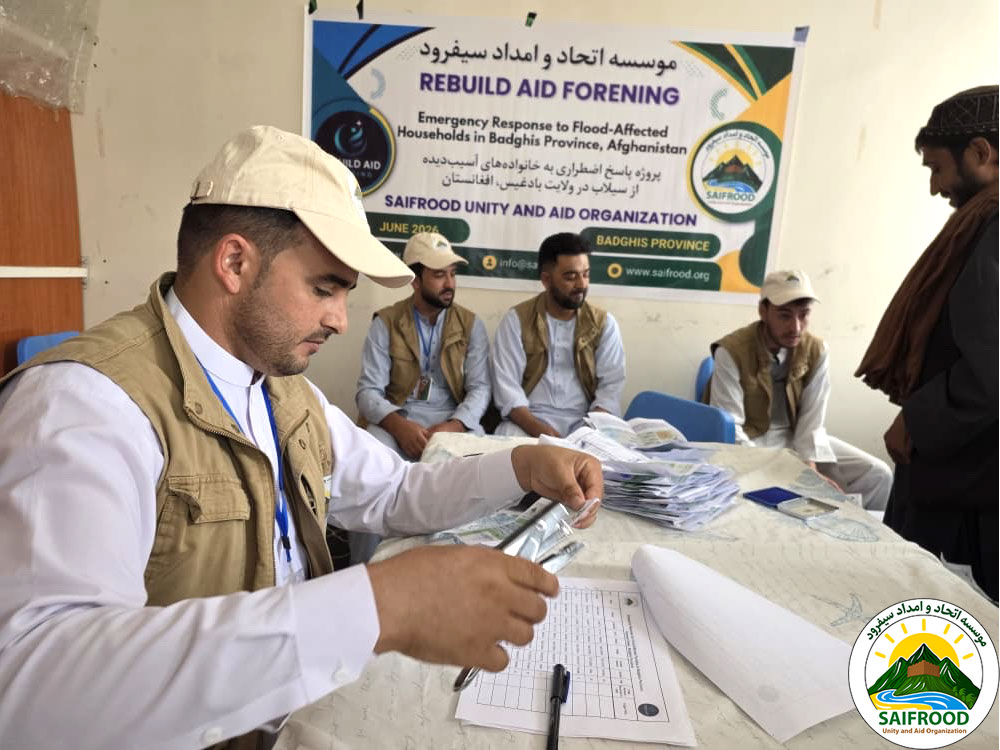
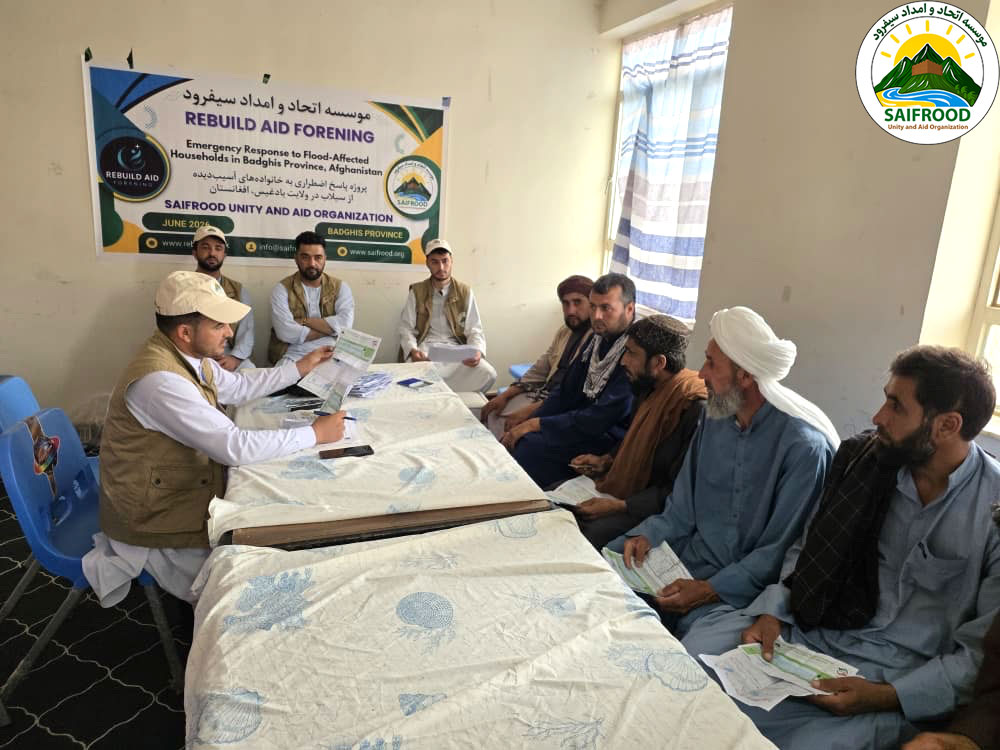
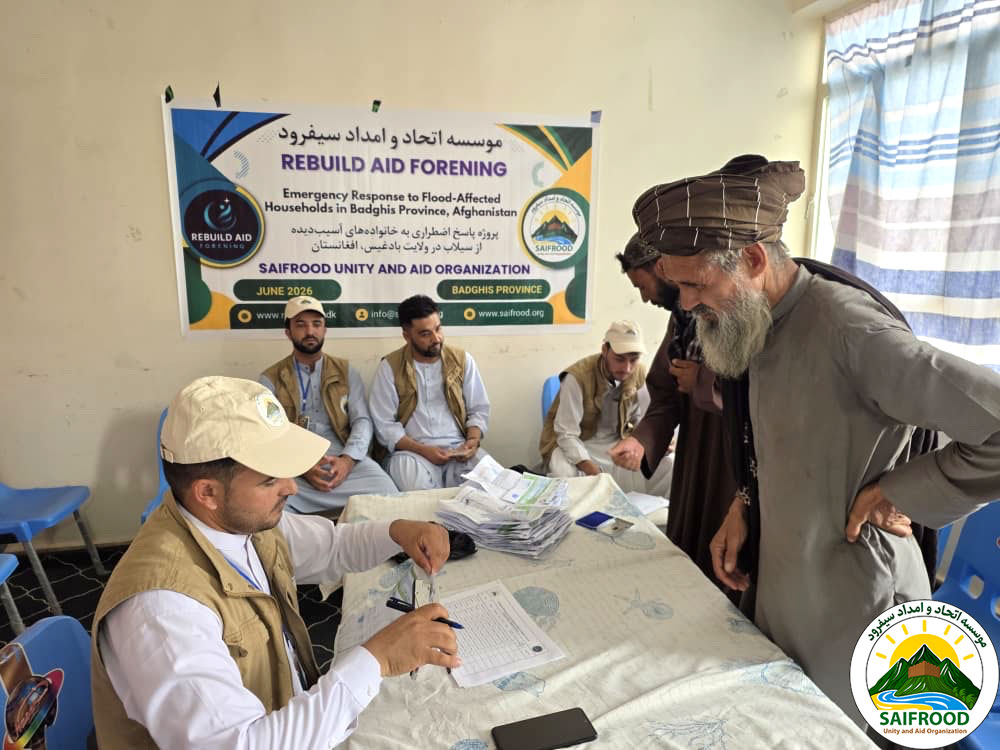
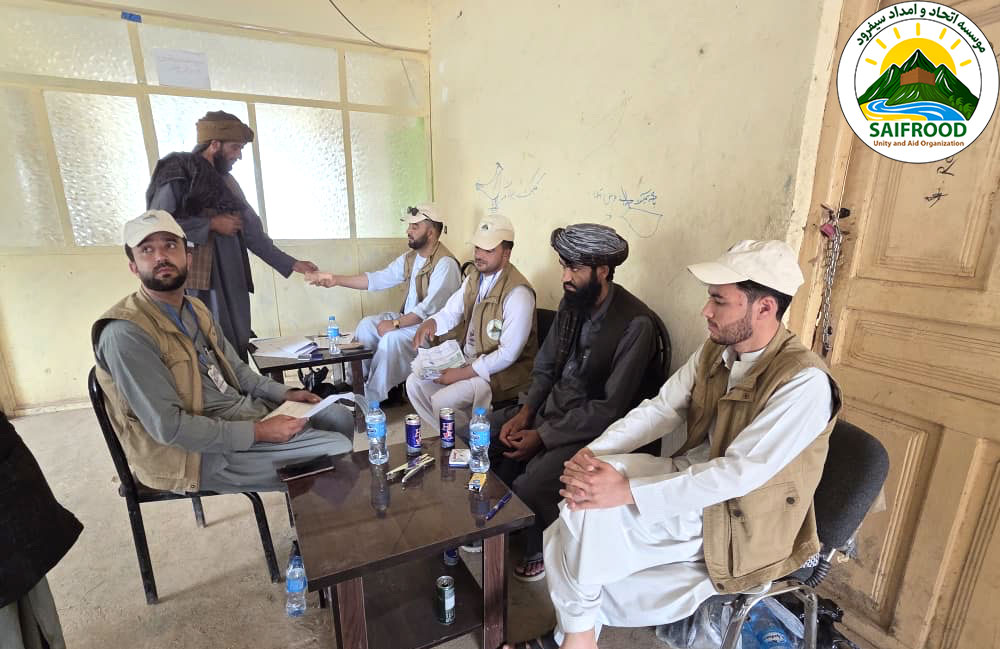
Saifrood Unity and Aid Organization (SUAO), in partnership with Rebuild Aid Forening and with financial support from the Danish Emergency Relief Fund (DERF), successfully implemented an emergency humanitarian project titled “Emergency Response to Flood-Affected Households in Badghis Province, Afghanistan.”
The project was designed to support families whose homes, agricultural land, crops, livestock, and primary sources of livelihood were severely affected by devastating floods caused by heavy rainfall. These households were left facing significant humanitarian and economic challenges, requiring urgent assistance to meet their basic needs.
Following comprehensive field assessments, detailed needs evaluations, and a transparent beneficiary selection process based on established vulnerability criteria, 150 highly vulnerable households were identified to receive emergency cash assistance. Each household received a cash grant equivalent to approximately three months of essential living expenses, enabling families to prioritize and purchase the items they needed most, including food, healthcare, clothing, shelter, and other basic necessities.
The cash distribution was conducted in close coordination with the relevant local authorities and community representatives. The distribution process was attended by the Acting Head of the Department of Economy of Badghis Province, the Director of Village Affairs of Muqur District, local council representatives, community elders, and other local stakeholders, ensuring transparency, accountability, fairness, and community participation throughout the implementation.
The project reached vulnerable households from Chah Kabli, Miranzai, Zad Ali Sofla, Zad Ali Ulya, Andaran, Kahshaniha, and Mohammadzai villages in Muqur District, as well as Tapa Eidgah and Jar Bozkashi in the provincial capital of Badghis. These communities were among the areas most severely affected by the recent floods.
Saifrood Unity and Aid Organization believes that cash assistance is one of the most effective and dignified forms of humanitarian support, empowering affected families to make informed decisions based on their own priority needs while preserving their dignity and enabling them to begin rebuilding their lives and livelihoods more quickly.
Saifrood Unity and Aid Organization sincerely expresses its appreciation to Rebuild Aid Forening for its valuable partnership and to the Danish Emergency Relief Fund (DERF) for its generous financial support. SUAO remains committed to standing alongside the people of Afghanistan—particularly those affected by natural disasters and humanitarian crises—and to continuing its efforts to reduce human suffering, strengthen community resilience, and improve the living conditions of vulnerable populations.
Together, we are working to build a safer, more resilient, and more hopeful future for vulnerable families across Afghanistan.
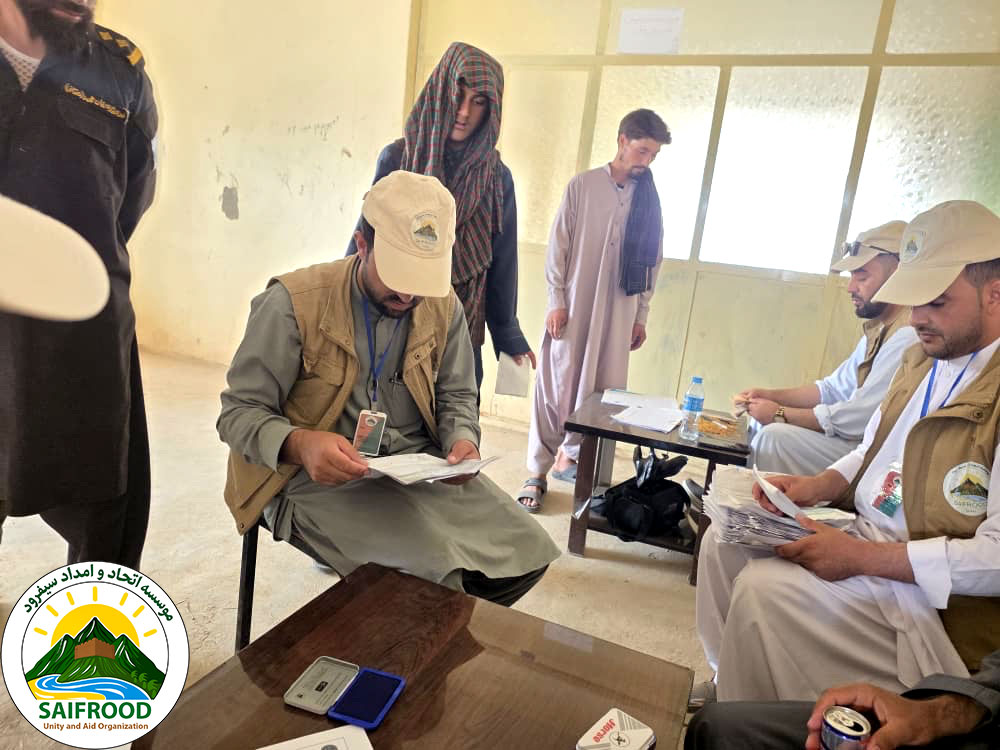
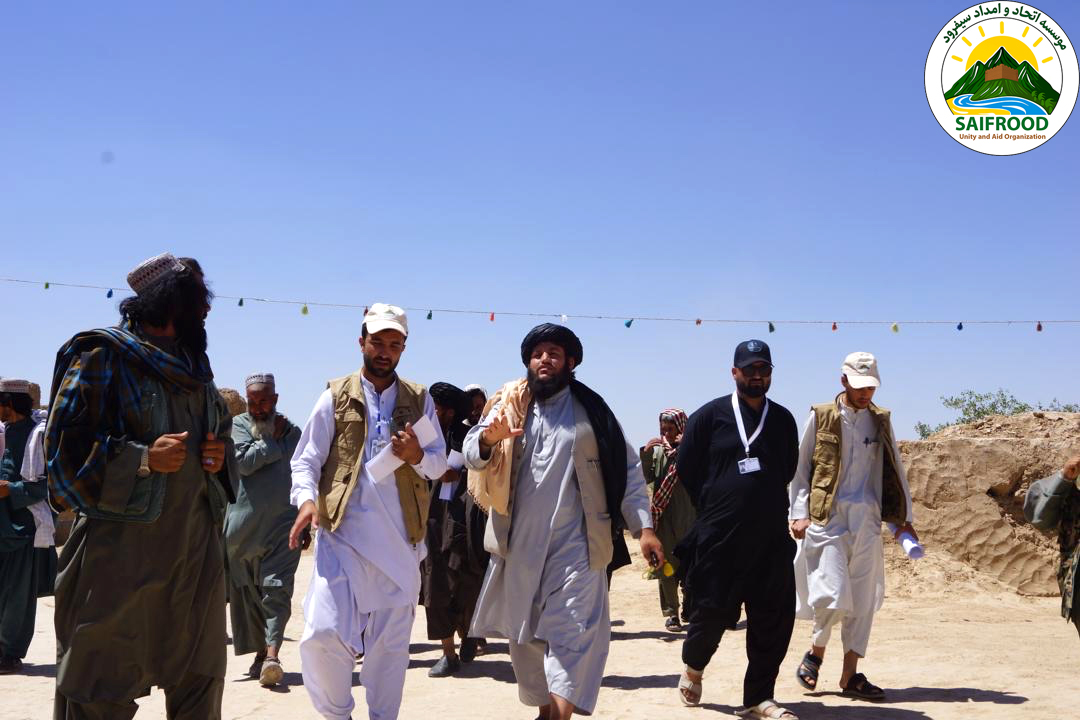
Verification meeting with beneficiaries before emergency cash distribution.Administrative documentation completed before humanitarian cash assistance.Beneficiary registration before receiving emergency humanitarian assistance.Individual consultation with a beneficiary during project implementation.Project staff preparing beneficiary documentation before cash distribution.Beneficiary receiving cash assistance and implementation guidance.Document verification and registration process before emergency cash assistance distribution.Processing beneficiary records during emergency cash assistance activities.Field coordination and beneficiary verification during project implementation.Verification of beneficiary documentation during emergency cash distribution.Beneficiary verification and humanitarian assistance delivery.Beneficiary identity verification before cash distribution under the emergency flood response project implemented by Saifrood Unity and Aid Organization (SUAO) in partnership with Rebuild Aid Forening and funded by DERF.SUAO and Rebuild Aid Forening complete emergency cash assistance distribution in Badghis Province.Final beneficiary registration before cash assistance.Verification conducted by SUAO and Rebuild Aid Forening before emergency cash distribution.Beneficiary registration coordinated by SUAO.Identity verification before humanitarian assistance.Consultation with community leaders.Beneficiary document verification.Community coordination with beneficiaries.Community awareness meeting before cash assistance.Community gathering before humanitarian assistance.Cash assistance distribution by SUAO and Rebuild Aid Forening.Emergency cash assistance reaches vulnerable households.Preparation of beneficiary documentation by SUAO.Community engagement before emergency cash assistance.Pre-distribution briefing for flood-affected households.Identity verification during humanitarian cash distribution.Beneficiary registration before emergency cash distribution.Flood-affected beneficiaries waiting to receive emergency cash assistance.Coordination and beneficiary verification during emergency cash assistance activities.Beneficiary verification before emergency cash distribution in Badghis Province by Saifrood Unity and Aid Organization (SUAO) in partnership with Rebuild Aid Forening.
On Monday, 22 June 2026, Rebuild Aid Forening welcomed representatives from CISU to the organization’s office in Aarhus for a scheduled monitoring visit (tilsyn). The visit took place from 09:00 until approximately 12:15 and formed part of CISU’s regular oversight of Danish grant holders receiving funding from the Danish Ministry of Foreign Affairs through CISU.
The monitoring visit was conducted by Hans-Jakob Hausmann (Advisor), Bolette Kornum (Controller) and Andrea Kiel Christensen from CISU. Representatives from Rebuild Aid Forening’s management and board participated throughout the meeting.
Following the agreed Terms of Reference, the meeting included a comprehensive review of Rebuild Aid Forening’s organizational structure, governance, accountability mechanisms, financial management systems, internal procedures, policies, monitoring framework, and documentation related to the organization’s ongoing humanitarian and development projects.
The CISU team also reviewed the organization’s completed self-assessment tools, including the Organisational Development Tool (ODT), the Accountability Checklist, and the Financial Checklist, together with supporting documentation covering financial management, procurement procedures, internal controls, partnerships, monitoring practices, and project implementation.
In addition, selected project documentation, narrative reports, financial reports, and partnership agreements relating to current CISU-supported initiatives were discussed as part of the monitoring process. The dialogue provided an opportunity to review existing systems, exchange experiences, and discuss opportunities for further strengthening organizational capacity and good governance.
For Rebuild Aid Forening, the monitoring visit represented a valuable opportunity for professional dialogue, learning, and continuous organizational development. The organization greatly appreciates the constructive approach adopted by the CISU team and the practical guidance provided throughout the visit.
“We view monitoring not only as an accountability requirement, but also as an important opportunity to learn, improve, and strengthen our organization. We sincerely appreciate CISU’s professional guidance and the open dialogue during the visit,” said Abdullah Samim, Director of Rebuild Aid Forening.
Rebuild Aid Forening remains committed to maintaining high standards of transparency, accountability, responsible financial management, and effective project implementation. Continuous improvement of organizational systems and governance remains a central priority as the organization continues its humanitarian and development work in partnership with local organizations and international donors.
Rebuild Aid Forening would like to extend its sincere appreciation to CISU for the professional, constructive, and collaborative monitoring visit and looks forward to continuing the strong partnership in support of high-quality humanitarian and development assistance.
Badghis Province, Afghanistan – Field teams from Saifrood Unity and Aid Organization (SUAO) have officially commenced the assessment, verification, and registration of households affected by the recent heavy rainfall and flooding in Badghis Province. These activities mark the initial phase of the project “Emergency Response to Flood-Affected Households in Badghis Province, Afghanistan,” which aims to identify eligible households for emergency cash assistance.
Over the past several days, SUAO assessment teams have been deployed to Muqur District, where they are conducting household assessments in Chah Kabli, Miran Zai, Zad Ali Ulya, Zad Ali Sofla, Andaran, Kahshaniha, and surrounding communities. At the same time, assessment activities are also underway in Eidgah and the Buzkashi Valley in Qala-e-Naw, the provincial capital of Badghis.
The recent heavy rainfall and flash floods have caused widespread destruction across the province, damaging homes, agricultural land, crops, livestock, and other essential livelihood assets. Many vulnerable families have suffered significant losses and are in urgent need of humanitarian support.
The purpose of the ongoing assessment is to identify the most vulnerable households affected by the disaster through a transparent and evidence-based process. SUAO field teams are visiting affected communities, meeting directly with families, assessing the extent of the damage, and collecting information based on established humanitarian targeting criteria. The assessment is being carried out in close coordination with community elders, local councils, and community representatives to ensure fairness, transparency, accountability, and equal access for those most in need.
Although the photographs published with this update were taken during field activities in Muqur District, the project will provide assistance to eligible flood-affected households in both Qala-e-Naw City and Muqur District.
Following verification of the collected data, eligible households will receive multi-purpose cash assistance, enabling families to prioritize and address their most urgent needs according to their individual circumstances. This cash-based approach promotes dignity, flexibility, and household-level decision-making while allowing families to recover in the way that best suits their immediate needs.
The Emergency Response to Flood-Affected Households in Badghis Province, Afghanistan project is funded by the Danish Emergency Relief Fund (DERF) and implemented by Saifrood Unity and Aid Organization (SUAO) in partnership with Rebuild Aid Forening (Denmark).
SUAO is committed to implementing every stage of the project in accordance with the humanitarian principles of humanity, impartiality, neutrality, accountability, transparency, and community participation. A confidential Complaints and Feedback Mechanism (CFM) has also been established to ensure that community members can safely submit feedback, concerns, or complaints throughout the project implementation.
Through this emergency response, SUAO aims to provide timely assistance to the most vulnerable flood-affected families while contributing to their early recovery and helping them restore their livelihoods and dignity after the devastating impact of the recent floods.
SUAO sincerely appreciates the generous support of the Danish Emergency Relief Fund (DERF) and the valuable partnership of Rebuild Aid Forening, whose collaboration makes this life-saving humanitarian response possible.
SUAO field staff conduct household assessments with flood-affected families in Muqur District, Badghis Province, as part of the DERF-funded emergency response project implemented in partnership with Rebuild Aid Forening.Detailed household assessments enable accurate targeting of emergency cash assistance.Field staff work closely with community representatives during beneficiary identification.Community meetings support transparency, accountability, and inclusive beneficiary selection.Humanitarian field teams reach remote villages to assess needs and register vulnerable households.Field teams assess agricultural losses alongside household damages during emergency flood response activities.Direct engagement with affected families ensures accurate humanitarian needs assessments.Community engagement remains central to SUAO’s transparent beneficiary assessment process.Individual household interviews are conducted to assess vulnerability and verify eligibility for humanitarian assistance.Field assessments help ensure that humanitarian assistance reaches the most vulnerable flood-affected households.SUAO field staff travel between affected villages to conduct household assessments and verify humanitarian needs.Flood-affected families participate in the household assessment process carried out by SUAO in partnership with local communities.Community consultations are an essential part of SUAO’s beneficiary assessment process to ensure transparent and accountable humanitarian assistance.Household registration and data verification help ensure accountable humanitarian assistance.
Rebuild Aid Forening and Saifrood Unity and Aid Organization Successfully Support Vulnerable Families in Khost Province
As part of their continued humanitarian commitment to supporting vulnerable and conflict-affected communities in Afghanistan, Rebuild Aid Forening, as the grant holder, in partnership with Saifrood Unity and Aid Organization (SUAO) as the implementing partner, successfully completed the distribution of emergency cash assistance to 350 conflict-displaced and vulnerable families in Alisher and Gurbuz Districts of Khost Province.
The humanitarian assistance was delivered under the project titled:
“Emergency Response for Conflict-Displaced Families along the Afghanistan–Pakistan Border”
The project was generously funded by the Danish Emergency Relief Fund (DERF) and implemented jointly by Rebuild Aid Forening and Saifrood Unity and Aid Organization (SUAO) to respond to the urgent humanitarian needs of families affected by ongoing border tensions and armed clashes along the Afghanistan–Pakistan border.
Supporting Communities Affected by Border Conflict
In recent months, communities living near the Afghanistan–Pakistan border have experienced severe humanitarian challenges due to escalating insecurity, armed clashes, forced displacement, destruction of homes, interruption of livelihoods, and worsening socio-economic conditions.
To address these urgent needs, the project provided emergency cash assistance to vulnerable families in Alisher and Gurbuz Districts of Khost Province.
The beneficiary households were selected through comprehensive field assessments and close coordination with local authorities, community elders, development councils, and community representatives to ensure transparency, fairness, and support for the most vulnerable families.
The assistance targeted families from the following areas:
Alisher District
Chargotai
Zakarkhail
Sadak
Landar
Kotkai
Yorom
Babrak Tana
Gurbuz District
Nari
Masha
Bori Khail
Sheikh Amir
These communities have been among the most severely affected by displacement, loss of livelihoods, economic hardship, and insecurity caused by the border conflict.
Humanitarian Objectives of the Project
The primary objective of the initiative was to provide rapid humanitarian assistance to conflict-affected families and reduce the immediate economic burden caused by displacement and crisis.
The project specifically aimed to:
Address urgent humanitarian needs of affected households
Reduce economic pressures on vulnerable families
Prevent further escalation of the humanitarian crisis
Support women, children, elderly people, persons with disabilities, and female-headed households
Protect human dignity and strengthen community resilience
Ensure transparent and accountable humanitarian assistance delivery
The emergency cash assistance enabled beneficiary families to address their immediate priorities, including food, shelter, healthcare, transportation, and other basic needs.
Transparent and Coordinated Humanitarian Response
The distribution activities in both districts were conducted in a transparent, organized, and well-coordinated manner with the participation and oversight of:
Representatives of the Khost Provincial Department of Economy
District local authorities
Community elders and village representatives
Security institutions
Development councils
Monitoring and verification teams
This strong coordination between humanitarian actors, local authorities, and communities played a vital role in ensuring fair beneficiary selection, accountability, and smooth implementation of the project activities.
Statements from Project Leadership
During the distribution activities, Mr. Farid Ahmad Yari, Project Manager, emphasized the importance of humanitarian accountability and dignity-centered assistance:
“We are committed to delivering humanitarian assistance in the most transparent, fair, and effective manner possible to those genuinely in need. The purpose of this program is not only the distribution of cash assistance, but also the protection of human dignity and the reduction of the daily hardships faced by families affected by recent crises.”
He further explained that field teams from Saifrood Unity and Aid Organization carried out extensive assessments and coordinated closely with local stakeholders to identify deserving beneficiaries and ensure the assistance reached the most vulnerable households.
Commitment to Vulnerable Communities
Mr. Abdullah Samim, President of Saifrood Unity and Aid Organization, highlighted the organization’s long-term commitment to supporting vulnerable communities across Afghanistan and appreciated the role of Rebuild Aid Forening and all supporting stakeholders.
He stated:
“We sincerely appreciate the support and cooperation of Rebuild Aid Forening, the Danish Emergency Relief Fund, the Khost Provincial Department of Economy, district authorities, community elders, security institutions, and all individuals who contributed to facilitating this humanitarian response. This coordination and mutual trust are essential for the successful implementation of humanitarian projects.”
He further added:
“Saifrood Unity and Aid Organization remains committed to standing beside the people of Afghanistan, especially families affected by conflict, displacement, natural disasters, and humanitarian crises. We believe that solidarity, community participation, and close cooperation between humanitarian organizations and local communities can significantly reduce the suffering of vulnerable families.”
Mr. Samim also confirmed that the humanitarian assistance process for all targeted districts under the project has now been successfully completed.
Strengthening Humanitarian Partnerships
The successful implementation of this project demonstrates the importance of strong humanitarian partnerships between international donors, grant holders, and local implementing organizations in responding to crises in Afghanistan.
Through the financial support of the Danish Emergency Relief Fund (DERF), the coordination and grant management of Rebuild Aid Forening, and the field implementation capacity of Saifrood Unity and Aid Organization, vulnerable families affected by border conflict were able to receive timely and life-saving humanitarian assistance.
The project also reinforced the importance of community engagement, local coordination, and transparent humanitarian programming in reaching vulnerable populations effectively.
Broader Humanitarian Efforts
In addition to this emergency response project, Saifrood Unity and Aid Organization has implemented a wide range of humanitarian, social, and development initiatives across Afghanistan in recent years, including:
Cash assistance and legal counseling for Afghan returnees from Iran
Emergency response support for earthquake-affected families in Kunar Province
Humanitarian cash assistance for internally displaced families
Social and legal support services for vulnerable groups
Educational and sports activities for youth
Humanitarian response planning for flood-affected communities in Badghis Province
These initiatives reflect the organization’s broader commitment to supporting vulnerable communities and strengthening resilience across Afghanistan.
Looking Forward
At the conclusion of the project activities, officials from Rebuild Aid Forening and Saifrood Unity and Aid Organization expressed hope that the emergency cash assistance would help alleviate some of the immediate hardships faced by affected families and contribute to stronger humanitarian support systems for vulnerable communities in the future.
Both organizations reaffirmed their commitment to continuing humanitarian cooperation and supporting communities affected by conflict, displacement, and humanitarian crises throughout Afghanistan.
SUAO humanitarian team manages the registration and cash assistance process for vulnerable families affected by border conflicts in Alisher District, Khost.Beneficiary families complete registration procedures during the emergency humanitarian cash distribution program implemented by SUAO in Alisher District.
Local residents and humanitarian workers participate in the emergency response assistance program organized by SUAO in Khost Province.SUAO staff and local representatives coordinate emergency cash assistance delivery for conflict-affected families in Khost.Beneficiaries interact with SUAO staff during the humanitarian cash assistance registration and verification process.
The emergency response distribution center established by SUAO for vulnerable families affected by border conflicts in Khost Province.Conflict-affected residents gather during the implementation of SUAO’s emergency response project in Alisher District.A SUAO team member provides guidance and information to beneficiaries during the humanitarian response activity in Alisher District.SUAO humanitarian staff distribute emergency cash support to conflict-affected families and vulnerable children in Alisher District.Humanitarian workers from Saifrood Unity and Aid Organization complete documentation and assistance procedures for affected families.
Jordskælv i Kunar-provinsen: Alvorlig humanitær situation kræver akut støtte
Om natten den 31. august 2025 (10 Sunbula 1404) kl. 23:40 blev Kunar‑provinsen og de omkringliggende områder ramt af et kraftigt jordskælv på 6,7. Jordskælvet forårsagede omfattende ødelæggelser i seks distrikter: Nurgal, Chawkay, Chapa Dara, Watapur, Khas Kunar og Narang, hvor tusindvis af familier mistede deres hjem, ejendele og levegrundlag.
Omfang af ødelæggelser og menneskelige tab
Katastrofen medførte mere end 2.500 dødsfald og omkring 3.700 tilskadekomne. De hårdest ramte områder var Mazar Dara i Nurgal‑distriktet og Diwa Gul Dara i Chawkay‑distriktet, hvor både menneskelige og materielle tab var særligt omfattende. Husstande blev ødelagt, og lokalsamfund blev efterladt uden adgang til basale serviceydelser.
Midlertidige lejre og levevilkår
Som følge af de massive ødelæggelser er familier, der har mistet deres boliger fuldstændigt — især børn, kvinder og ældre uden omsorgspersoner — blevet flyttet til midlertidige lejre. Disse lejre omfatter blandt andet:
Osmani‑lejren (Khas Kunar‑distriktet)
Central‑lejren (Chawkay‑distriktet)
Anderlach‑lejren (Chawkay‑distriktet)
Patan‑lejren
Mazar Dara‑lejren (Nurgal‑distriktet)
Zuri Baba‑lejren (Nurgal‑distriktet)
I øjeblikket bor familierne i telte leveret af nationale og internationale humanitære organisationer, ofte uden tilstrækkelig beskyttelse mod vejrforhold, manglende privatliv og begrænset adgang til grundlæggende fornødenheder.
Kritisk situation i Osmani‑lejren
Osmani‑lejren i Khas Kunar‑distriktet huser i dag 585 familier, svarende til 3.527 personer, fordelt på 251 telte. Ifølge officielle registreringer er der i området dokumenteret 107 dødsfald og 158 tilskadekomne. De nuværende forhold udgør en alvorlig humanitær udfordring, særligt i takt med at vinteren nærmer sig.
Bekymringer før vinteren
Beboerne i lejrene udtrykker dyb bekymring over:
Manglende sikkert og holdbart husly
Utilstrækkelig adgang til mad, varme og basale fornødenheder
Alvorlige økonomiske vanskeligheder og udbredt arbejdsløshed
Uden yderligere støtte risikerer mange familier at stå over for nye sundheds‑ og beskyttelsesrisici i vintermånederne.
Feltdata og behovsvurdering
Denne rapport er baseret på feltundersøgelser og behovsvurderinger gennemført af Rebuild Aids lokale partner, Saifrood Unity and Aid Organization (SUAO). SUAO har været til stede i Kunar‑provinsen siden 16. oktober 2025, hvor organisationen har indsamlet data, dokumenteret levevilkår og identificeret de mest presserende behov blandt de jordskælvsramte familier.
Rebuild Aids engagement
Rebuild Aid står i solidaritet med ofrene og deres familier i denne svære tid og fortsætter sit arbejde med at støtte akut humanitær indsats, behovsvurderinger og koordinering med relevante aktører. Vores fokus er at bidrage til livreddende støtte, beskyttelse og værdige levevilkår for de mest sårbare familier, mens genopretningsindsatsen i regionen fortsætter.
Midlertidige telte i Osmani‑lejren i Khas Kunar‑distriktet, hvor familier der har mistet deres hjem efter jordskælvet den 31. august 2025, søger ly.Jordskælvsramte familier i Kunar‑provinsen lever under vanskelige forhold i telte leveret af humanitære organisationer.Børn og kvinder i en midlertidig lejr i Chawkay‑distriktet, blandt de hårdest ramte områder efter jordskælvet.Dokumentation af levevilkår og behov blandt jordskælvsramte familier udført af Saifrood Unity and Aid Organization (SUAO).Udsigt over en af de midlertidige lejre i Nurgal‑distriktet, hvor familier fortsat mangler sikkert husly forud for vinteren.
Kontant- og juridisk støtte til nyligt deporterede afghanske familier
Gennemført af Saifrood Unity and Aid Organization (SUAO) i partnerskab med Rebuild Aid (Danmark) og finansieret af Danish Emergency Relief Fund (DERF) leverede dette projekt livreddende kontantbistand og juridisk rådgivning til 280 deporterede afghanske familier, der var vendt tilbage fra Iran og Pakistan. Med et gennemsnit på syv familiemedlemmer pr. husstand gav projektet direkte støtte til 1.960 personer og dækkede deres mest presserende økonomiske og juridiske behov.
Behovsvurdering og projektstart
Efter en markant stigning i tvungne hjemsendelser gennemførte SUAO og Rebuild Aid hurtige feltundersøgelser ved Milak (Nimroz‑provinsen), Islam Qala samt Herat by. Undersøgelserne dokumenterede udbredt fattigdom, mangel på sikkert husly og fravær af gyldige identifikationsdokumenter blandt de hjemvendte familier. Disse veldokumenterede behovsdatasæt udgjorde grundlaget for DERF’s godkendelse og den efterfølgende opstart af projektet.
Gennemsigtig implementering og lokal koordination
Efter officiel registrering hos Økonomiministeriet koordinerede SUAO tæt med guvernørkontoret i Herat, Department of Economy og kommunale myndigheder for at sikre en gennemsigtig og ansvarlig gennemførelse. Implementeringen blev fordelt således, at 30 % af støtten blev leveret i Karukh‑distriktet, mens 70 % blev gennemført i Herat by, baseret på identificerede behov.
I Karukh modtog 84 familier kontantstøtte under lokal supervision, mens 196 familier i Herat by blev assisteret. Målgruppen omfattede blandt andet kvindehusstande, ældre personer og personer med handicap, som ofte står over for særligt komplekse udfordringer efter tvungen hjemsendelse.
Resultater og effekt
Hver familie modtog kontantstøtte samt juridisk vejledning med henblik på at opnå afghanske nationale ID‑kort (Tazkira). Tazkira‑dokumentation er afgørende for adgang til uddannelse, sundhedsydelser, beskæftigelse og offentlige tjenester, og indsatsen bidrog dermed til både akut afhjælpning og langsigtet reintegration.
Alle projektfaser blev overvåget og godkendt af lokale myndigheder, som fremhævede SUAO’s professionalitet, gennemsigtighed og stærke koordinering. Indsatsen demonstrerede et effektivt dansk‑afghansk humanitært partnerskab, der gav hjemvendte familier mulighed for at genopbygge deres liv med værdighed, stabilitet og håb.
Tak og fortsat engagement
Rebuild Aid og SUAO udtrykker dyb taknemmelighed til Danish Emergency Relief Fund (DERF) samt til regionale og lokale partnere for deres værdifulde samarbejde. Organisationerne bekræfter deres fælles engagement i fortsat at støtte sårbare afghanske familier gennem human, gennemsigtig og bæredygtig humanitær indsats.
Kontant- og juridisk støtte ydet til nyligt deporterede afghanske familier gennemført af SUAO i partnerskab med Rebuild Aid og finansieret af DERF.Feltregistrering af hjemvendte familier ved Islam Qala‑grænsen som led i DERF‑finansieret humanitær indsats.Juridisk rådgivning til deporterede familier for at understøtte adgang til nationale ID‑dokumenter og basale rettigheder.Kontantstøtte uddelt til sårbare familier i Herat by under supervision af lokale myndigheder.Kvindeledede husstande blandt de deporterede modtager målrettet humanitær støtte i Herat‑provinsen.Implementering af kontantprogrammet i Karukh‑distriktet i samarbejde med lokale myndigheder.Feltarbejde udført af Saifrood Unity and Aid Organization for at vurdere behov blandt deporterede familier.Humanitær kontant‑ og beskyttelsesstøtte når familier, der mangler husly og basale ressourcer efter tvungen hjemsendelse.Koordineret indsats mellem Rebuild Aid, SUAO og provinsielle myndigheder sikrer gennemsigtig implementering.Projektet demonstrerer et stærkt dansk‑afghansk humanitært partnerskab støttet af Danish Emergency Relief Fund.
In the heart of the Sheida plain of Herat province, lives Naser — a man from Kabul who lost the use of his right leg. After years of displacement and hardship in Iran, he returned home with ten family members, hoping for a fresh start. But instead of peace, he found new struggles waiting.
Today, Naser and his family live in a fragile clay house, far from even the most basic necessities of life. The roof barely protects them from the cold, their table is often empty, and their children — who should be in school — face daily battles with hunger and hardship.
During a recent field visit, our local partner in Afghanistan — Saifrood Unity and Aid Organization (SUAO) — met Naser and his family and witnessed firsthand the depth of their suffering. Their story is not unique; it reflects the reality of countless returnee families across western Afghanistan who continue to endure unimaginable challenges.
The eyes of Naser’s children hold silent dreams of a future — dreams that struggle to survive under the weight of poverty and displacement. These families are not asking for luxury; they simply need safety, dignity, and hope.
Naser and his children urgently need support:
A safe and stable shelter
Warm, nutritious food
Access to clean drinking water
The opportunity for education
At Rebuild Aid, we believe that compassion can rebuild lives. Together with our trusted partner SUAO, we are committed to standing beside families like Naser’s — to help them move from the darkness of need to the light of hope.
Your support today can change their tomorrow.
Rebuild Aid (Denmark)
In partnership with Saifrood Unity and Aid Organization (Afghanistan)
Today, on 24 September 2025, a special seminar was held in Karukh district of Herat focusing on the registration and issuance of electronic ID cards (national identity cards) for Afghan deportees from Iran who lack identity documents.
The seminar brought together a large number of participants and emphasized the importance of electronic ID cards for verifying national identity, accessing public and social services, and benefiting from civil rights and entitlements.
A detailed explanation was provided on the procedure according to Article 4 of the Central Statistics Authority’s guidelines for issuing electronic ID cards. The process includes the following steps:
Filling out the form and registering the applicant
Reviewing documents and verifying identity
Paying the service fee
Recording demographic and biometric information
Quality control of the recorded information
Issuance of the electronic ID card
The project is funded by DERF and implemented by Rebuild Aid’s local partner in Afghanistan, Saifrood Unity and Aid Organization (SUAO).
Advocacy Seminar for Afghan returnees by Saifrood Unity and Aid Organization and Rebuild Aid
Advocacy Seminar for Afghan returnees by Saifrood Unity and Aid Organization and Rebuild Aid
Advocacy Seminar for Afghan returnees by Saifrood Unity and Aid Organization and Rebuild Aid
Advocacy Seminar for Afghan returnees by Saifrood Unity and Aid Organization and Rebuild Aid
Advocacy Seminar for Afghan returnees by Saifrood Unity and Aid Organization and Rebuild Aid
Two Containers with School and Medical Equipment Sent to Afghanistan
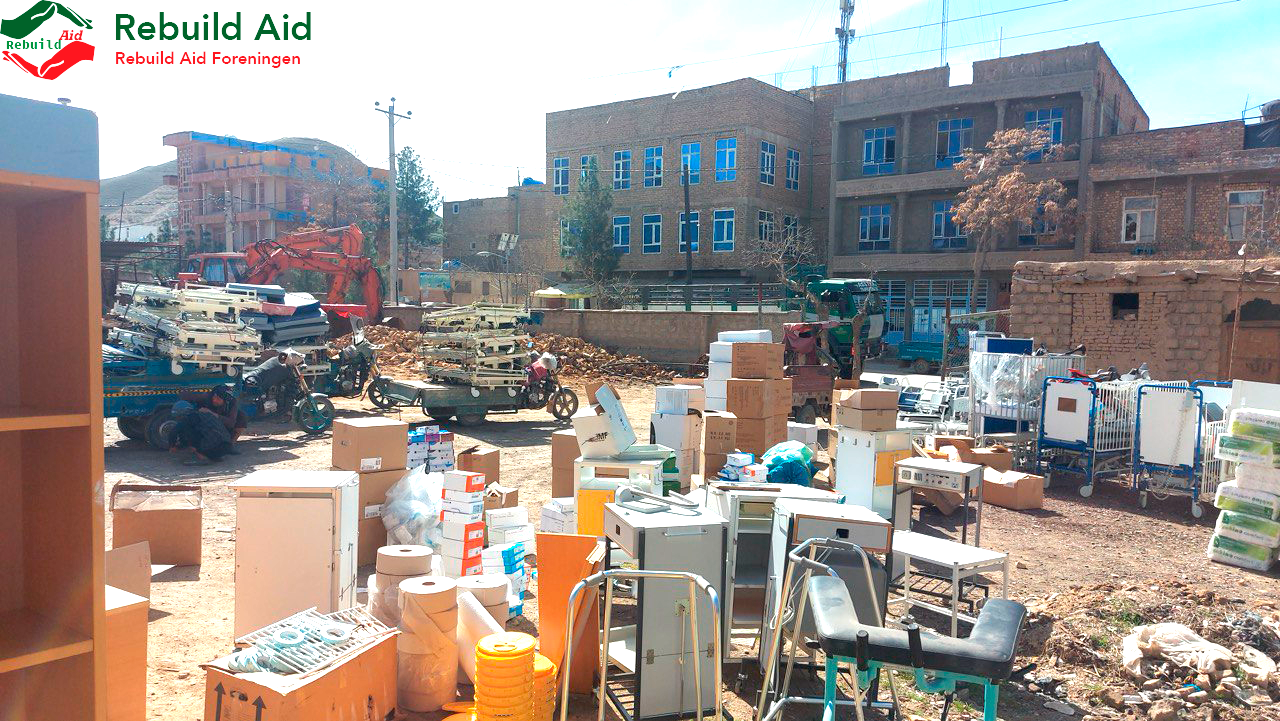
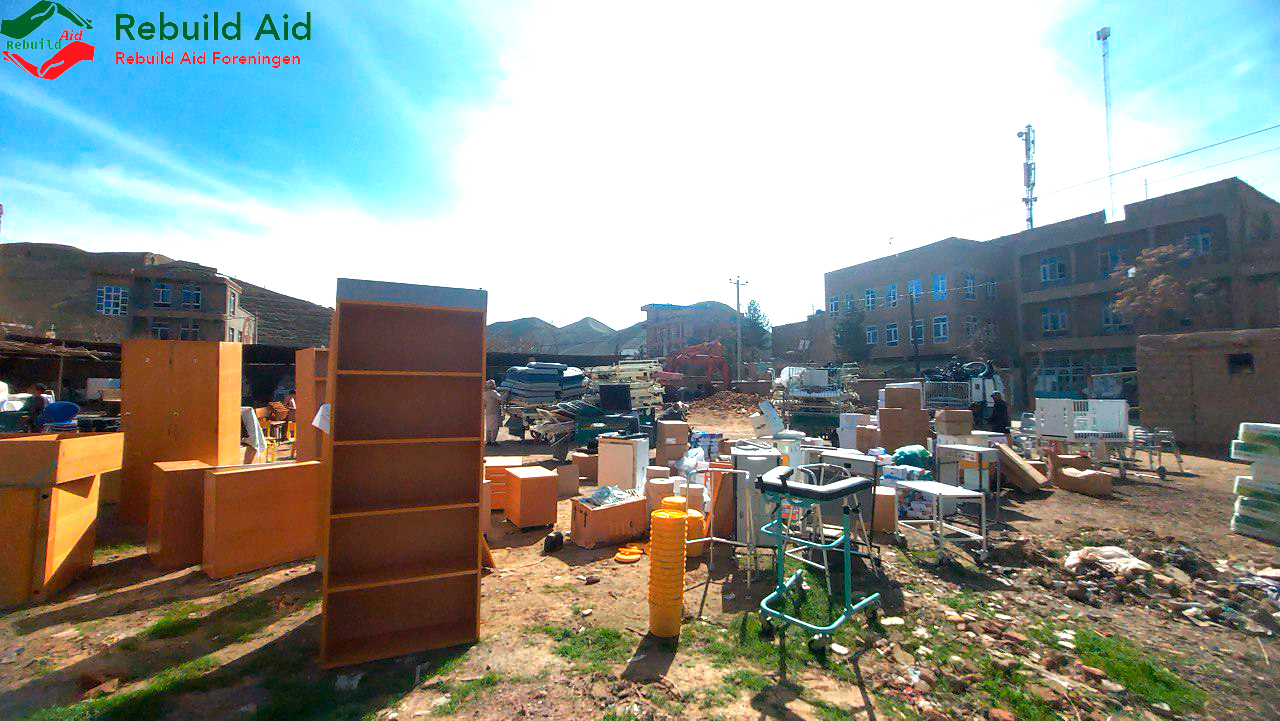
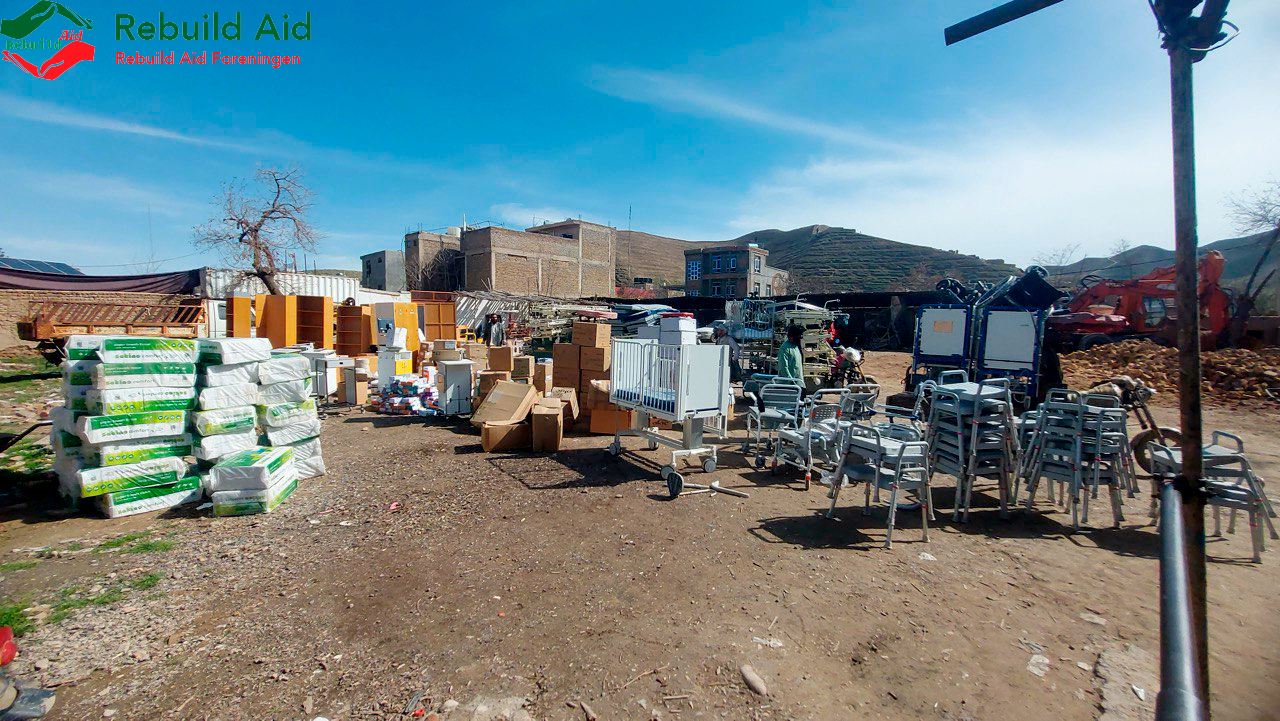
Rebuild Aid Association, with support from the Globus Fund, has sent two containers of essential equipment to Afghanistan to support education and healthcare in some of the country’s most vulnerable areas.
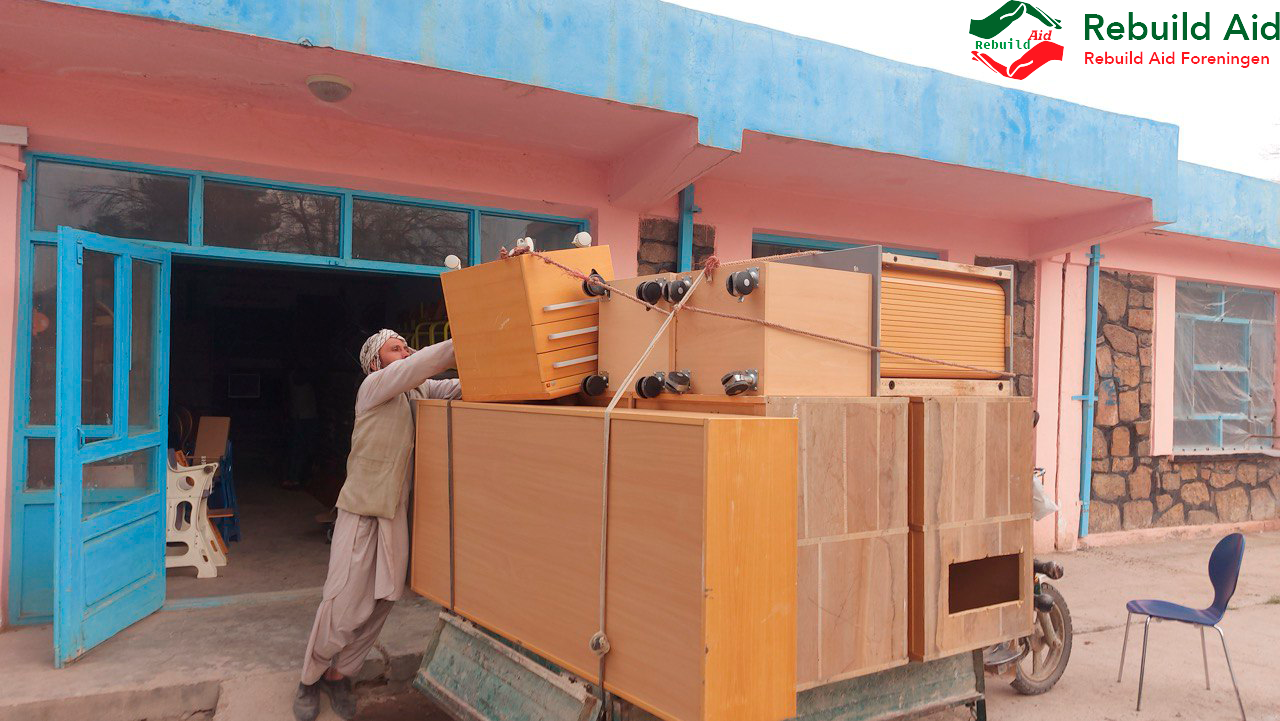
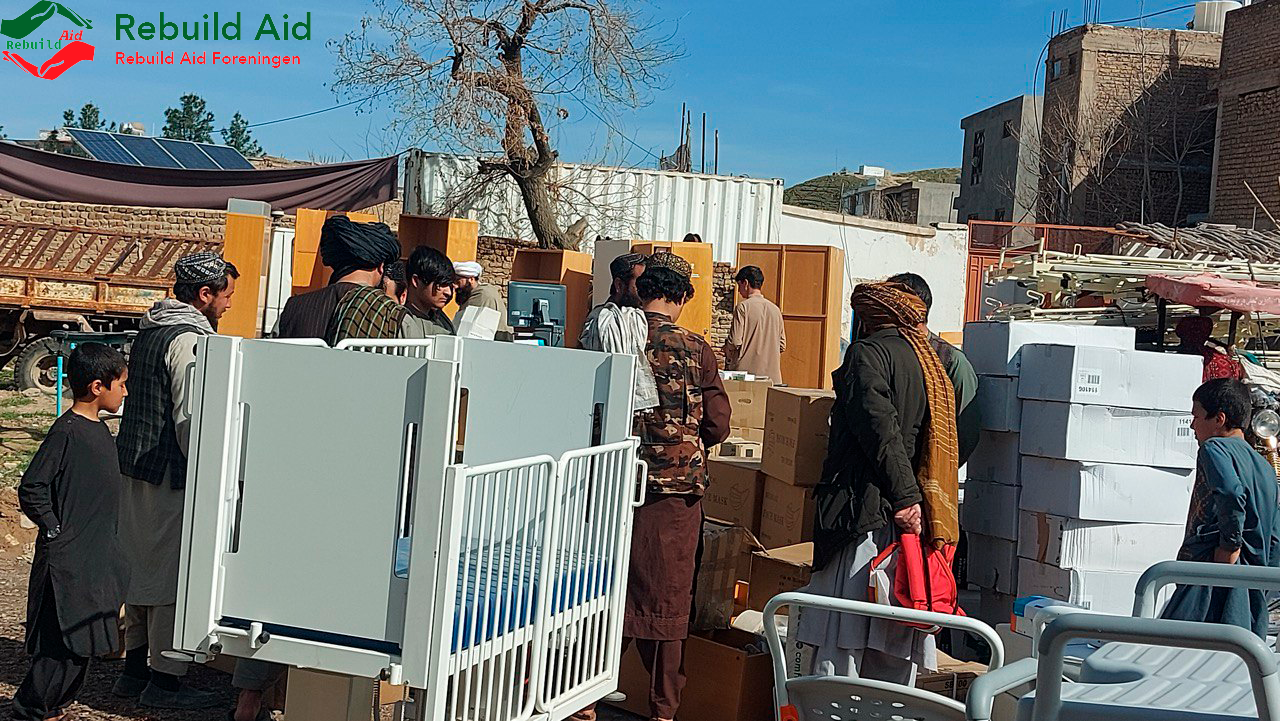
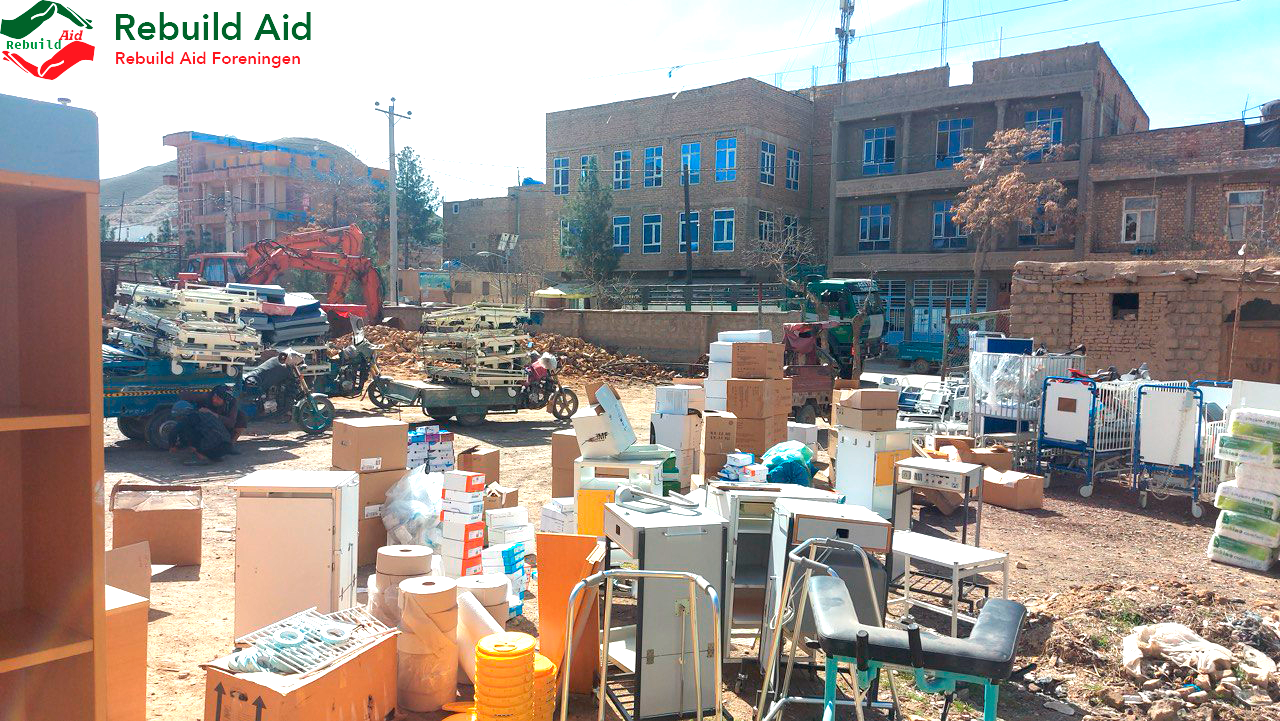
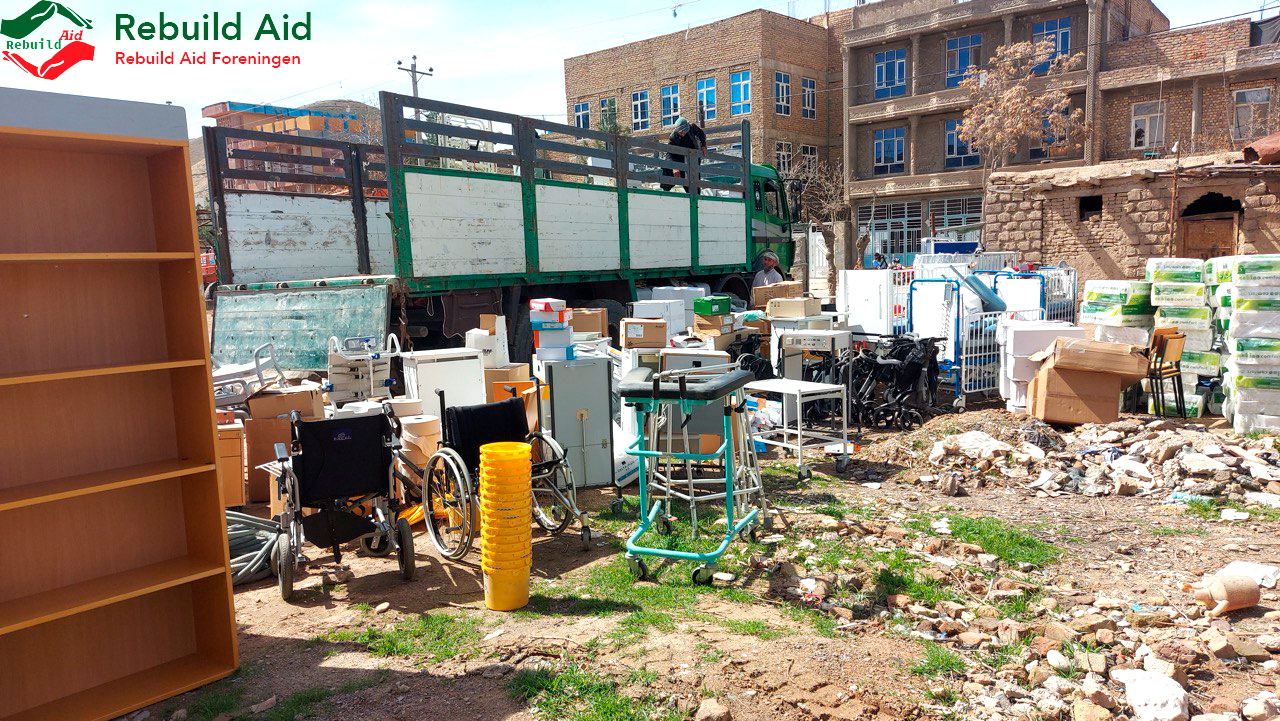
The two containers are filled with durable school and medical items, including tables, chairs, shelves, cabinets, hospital beds, wheelchairs, and crutches. The equipment was collected in Denmark and will now be used in schools and health clinics in provinces where needs are high and resources are limited.
The initiative is part of Rebuild Aid Association’s humanitarian efforts aimed at providing children and adults in Afghanistan with access to better learning environments and basic healthcare services.
– This equipment will benefit hundreds of children and patients and help strengthen fundamental community services in areas where there is a need for everything from furniture to medical support, says Abdul Ghader Alam, Chairman of Rebuild Aid Association.
The project has been made possible thanks to support from the Globus Fund and the great efforts of volunteers, partners, and logistics collaborators in Denmark.
Rebuild Aid Association continues to work on establishing more initiatives that connect the capacity of Danish civil society with the needs in Afghanistan.
For more information about the project and upcoming shipments, contact us at info@rebuildaid.dk or visitwww.rebuildaid.dk.
We have once again succeeded in supporting 2 schools and 2 hospitals/clinics in Afghanistan.
Geldan Girls’ School, located in Tulak district, Qotos High School near Firozkoh city, Ghor Provincial Hospital, and Tabibane Noor have received school and hospital equipment.
We thank our partner Jameghor Charity Organization (JCO), who handled the reception and distribution of the equipment.
Join as a Volunteer or Member
Become a volunteer or member of Rebuild Aid Association and make a real difference! Gain meaningful experience by participating in empowerment initiatives that transform lives and communities, and be part of our journey toward sustainable development and support for vulnerable groups.